Building Blocks
System Design From Scratch — Test Yourself: 20 Questions
A review post for the six-floor foundation series .None of these are "define X." They're scenarios and traps
Building Blocks
A review post for the six-floor foundation series .None of these are "define X." They're scenarios and traps
Building Blocks
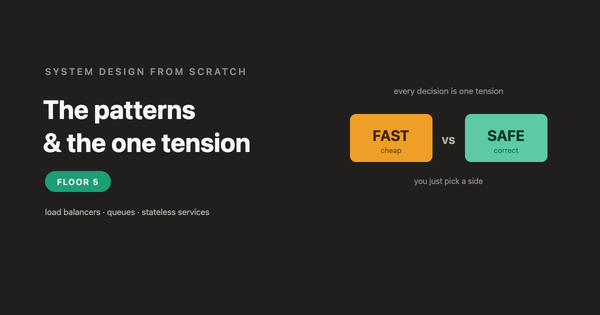
Sixth and final post in the foundation series. We've built the whole stack, bottom to top (Floors 0–4). This floor is the meta-floor: the everyday patterns engineers assemble from these blocks, and the single tension that runs through every one of them.
System Design
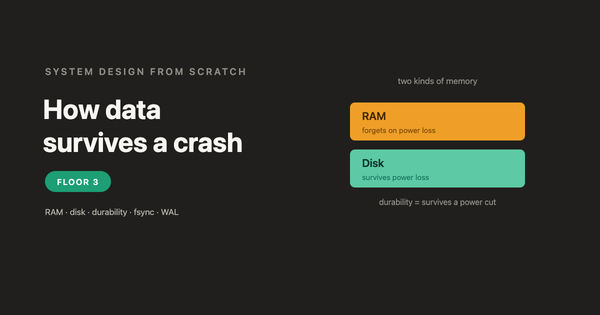
Fourth post in the series. We can move data reliably between machines (Floor 2). Now: once data arrives, how do you store it so it survives a crash, a power cut, a reboot? This is where the word durability finally gets a precise, physical meaning.
Building Blocks
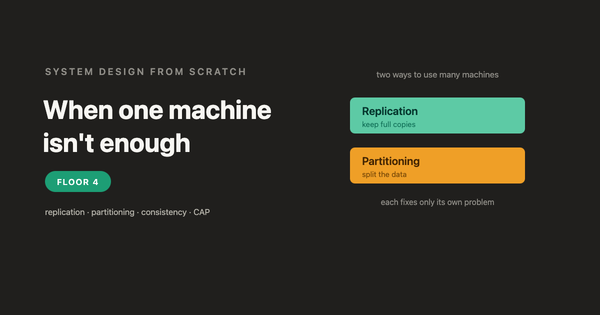
Fifth post in the series. We can store data durably on one machine. But one machine is a single point of failure, and it has a capacity ceiling. This floor goes wide — and it's the floor the whole distributed world stands on.
System Design
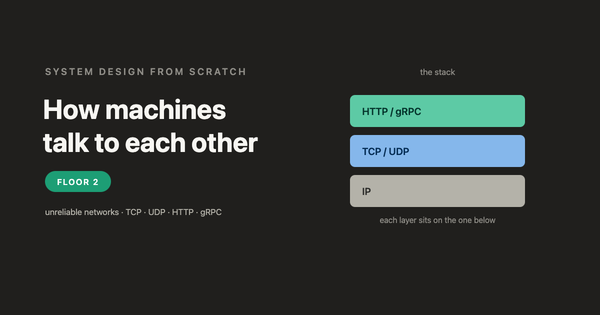
Third post in the series. Floor 0 taught us the network is the slow shelf. Floor 1 squeezed everything out of one machine. This floor is where single-machine thinking ends and distributed thinking begins — and it's where a lot of engineers quietly get things wrong.
Building Blocks
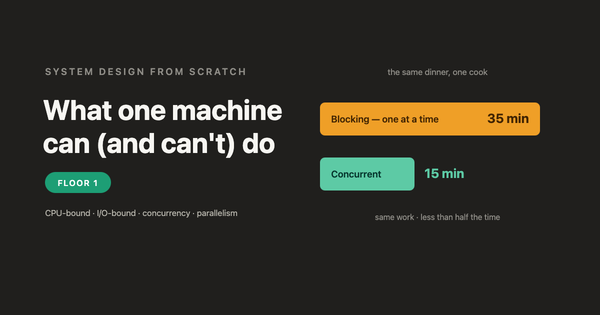
Second post in the series. Floor 0 taught us that some data is far away and slow to reach. This floor asks the question that follows: while you're stuck waiting for something slow, what should you actually be doing?
System Design
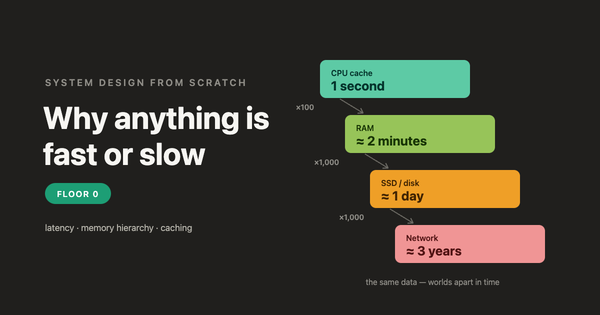
The first post in a series where I build system-design intuition from the ground up. No jargon dumped on you up front — we start with an everyday situation, reason it out, and only then attach the technical name.